
01Initial MVP
Powergram Storage
Make your battery work smarter.
Plan when to charge and discharge based on electricity prices, site demand, and battery constraints.
Intelligent energy optimization
Smarter battery and EV charging schedules. Lower energy costs. Better use of your grid capacity.
01 — The challenge
Businesses are investing in battery storage, electric vehicles, and smarter energy infrastructure. But managing them together isn’t always straightforward.
Electricity prices fluctuate. Grid capacity is limited. Vehicles need to be ready on time. And every system has its own requirements.
The opportunity isn’t just adding more infrastructure. It’s making better use of what you already have.
Powergram brings energy data and operational needs into one place, helping businesses plan when to charge, store, and use electricity.
Different systems. Separate decisions.
Each system optimizes for itself — nothing coordinates them.

02 — Platform
Powergram is building the software that brings commercial energy operations together. Starting with battery and EV charging optimization, the platform is designed to grow into a connected energy management system.
Make your battery work smarter.
Plan when to charge and discharge based on electricity prices, site demand, and battery constraints.
Charge smarter. Depart on time.
Optimize EV charging around vehicle schedules, electricity costs, and available site capacity.
Unlock more from your grid connection.Planned capabilities to manage grid constraints and support participation in eligible energy flexibility markets.
Bring your energy systems together.Integrations designed to connect energy assets, charging infrastructure, and operational data.
One view across every site.A future platform for monitoring and coordinating energy assets across multiple locations.
Starting focused. Built to scale. Our initial MVP focuses on battery and fleet charging schedules. Additional capabilities are part of the longer-term platform roadmap.
03 — How it works
Powergram turns electricity prices, energy demand, and operational requirements into practical schedules.
Connect
Bring the data together. Combine electricity prices, site demand, battery information, and vehicle charging needs.
TodayFrom recommendation to automation. The initial MVP focuses on optimized scheduling and exports.
FutureAutomated hardware control is planned for future development.
04 — Product
What happens when battery storage, vehicle charging, and electricity demand are planned together? Explore an illustrative 24-hour depot scenario comparing standard and optimized energy scheduling.
See how smarter scheduling can change when energy is used — without changing what your operations need.
Same prices, site limits and departure times in both scenarios — only the schedule differs. Illustrative data for demonstration purposes. Not a verified customer result.
Charges in low-price hours, discharges through price peaks. Ends the day at 70%.
Illustrative simulation using modeled data. Savings represent energy costs at spot prices only and exclude grid tariffs, battery degradation, and other charges. Results are not verified operational outcomes.
Illustrative product concept
05 — Solutions
From logistics depots to commercial properties, Powergram is designed for businesses where energy costs, capacity, and operational requirements intersect.

Keep your fleet moving. Charge vehicles at the right time, manage site capacity, and meet departure schedules without unnecessary electricity costs.

Plan battery operation and electricity use around changing demand, electricity prices, and site constraints.
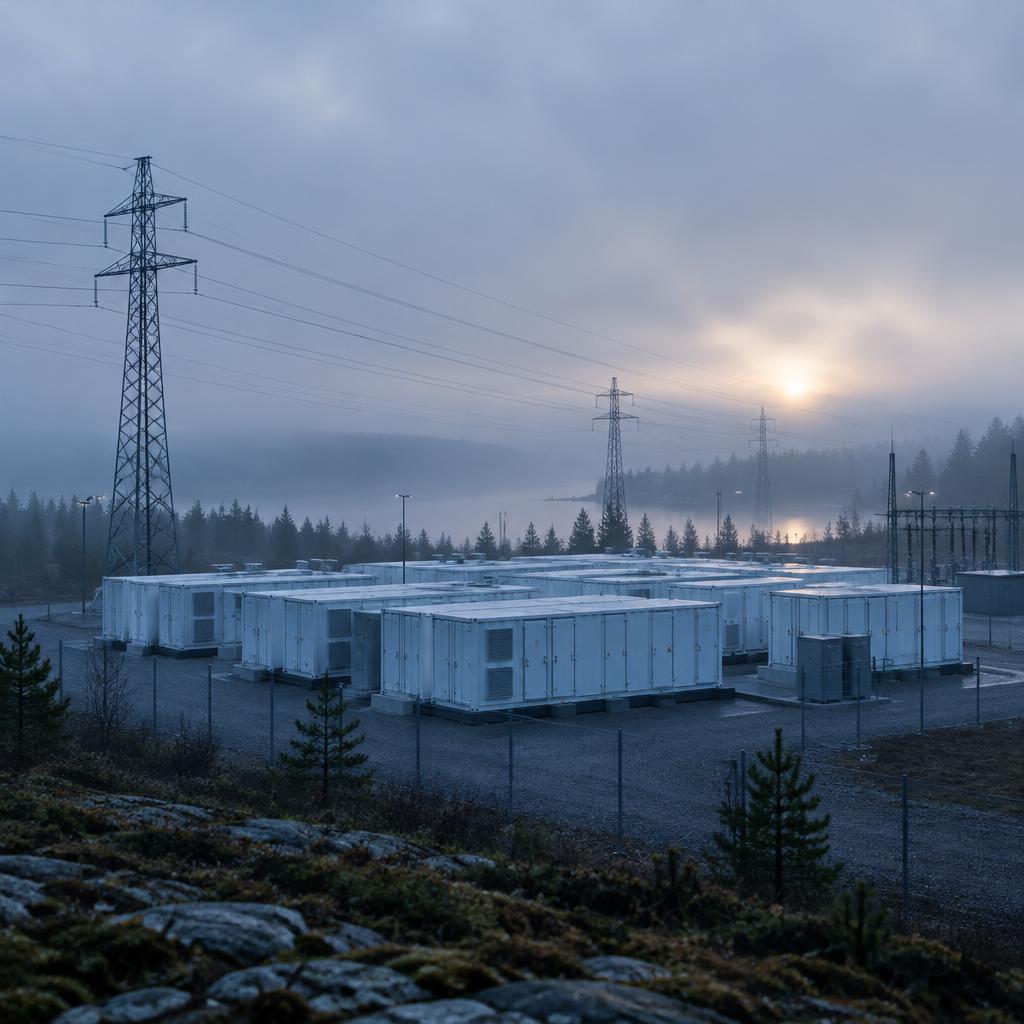
A longer-term vision for coordinating energy assets across multiple locations.
Images are illustrative. Applications represent intended markets, not existing customer deployments.
06 — Vision
The future of energy is coordinated.
The energy transition is bringing more batteries, electric vehicles, and distributed energy systems into everyday business operations. But more infrastructure alone won’t solve the challenge.
The next step is making it all work together.
Powergram is starting with smarter scheduling at individual sites, with a long-term ambition to coordinate energy across connected businesses, buildings, and infrastructure.
Less complexity. Better decisions. More value from every kilowatt.

Built in Sweden
Powergram is developing software to help commercial sites coordinate battery storage, EV charging, and electricity demand. Starting with intelligent scheduling, the platform is designed to evolve toward broader energy coordination across connected infrastructure.
Discuss your energy challengesDiscover how smarter battery and EV charging schedules could help your business reduce costs and make better use of available capacity.